Factory Acceptance Test (FAT) & Preventive Maintenance for Vacuum Sealers
Verify <=1 kPa chamber vacuum hold, >=1.5 N/15 mm wet-pouch seal peel strength, PTFE tape & nichrome wire care, and 500-hour rotary-vane pump oil maintenance.
Keep Pump-Down Fast and Seal Bars Leak-Free Across Millions of Cycles
Ninety percent of ‘slow vacuum’ or ‘leaking corner’ complaints on industrial chamber sealers trace back to three 5-minute maintenance items: milky water-contaminated pump oil, burned PTFE tape over the nichrome seal wire, or a flattened silicone lid gasket. Grounded in vacuum sealer sizing and selection and vacuum pump and barrier film specs, run these checks at FAT and on your weekly shop-floor PM sheet.
Preventive care extends rotary-vane pump life past 10+ years.
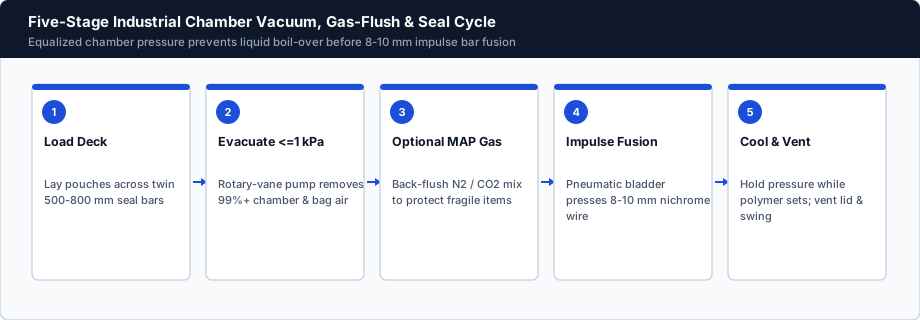
Five-Point Vacuum Sealer FAT & Preventive Care Schedule
Pre-shipment acceptance tests and routine plant maintenance intervals:
| Inspection / PM Item | FAT Acceptance Test | Shop-Floor Maintenance Interval |
|---|---|---|
| 1. Ultimate Vacuum & Hold | Pull empty chamber <=0.8–1.0 kPa; hold valved 60 sec | Pressure rise < 0.3 kPa in 60s; check lid gasket weekly |
| 2. Wet-Bag Burst & Peel | Seal 50 water-filled PA/PE pouches; drop & peel test | >=1.5 N/15 mm continuous clear weld; zero air channels |
| 3. PTFE Tape & Seal Wire | Inspect 10 mm weld smoothness across full bar width | Replace brown/scorched PTFE cloth tape in 3 min before wire shorts |
| 4. Rotary-Vane Oil & Filter | Verify clear sight-glass level & quiet exhaust mist filter | Daily 15-min gas-ballast; change synthetic oil every 500 hrs |
| 5. MAP Residual O2 Check | Headspace O2 needle analyzer on 10 flushed packs | < 0.5% – 1.0% residual O2 verified |
Review heavy-plate build specs on industrial vacuum sealer manufacturer.
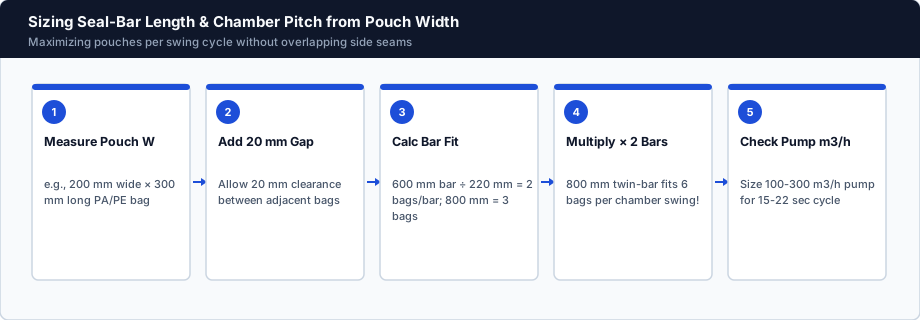
Industrial Vacuum Engineering Notes
- Milky Pump Oil Means Water Emulsion—Change Immediately!: Inspect the oil sight glass every Monday morning: cloudy espresso-colored oil means condensed water vapor has emulsified—drain warm and refill before vanes rust.
- Flip Silicone Counter-Pressure Bars: Upper silicone rubber pressure pads develop a groove after months of sealing—simply flip the square silicone insert 180° for a fresh flat face!
- Check Exhaust Mist Eliminator Backpressure: A clogged oil-mist exhaust filter overheats the pump and blows smoke—swap the exhaust cartridge annually.
Order Equipment With a Complete Spare PM Kit
Start your equipment specification on Project Brief.
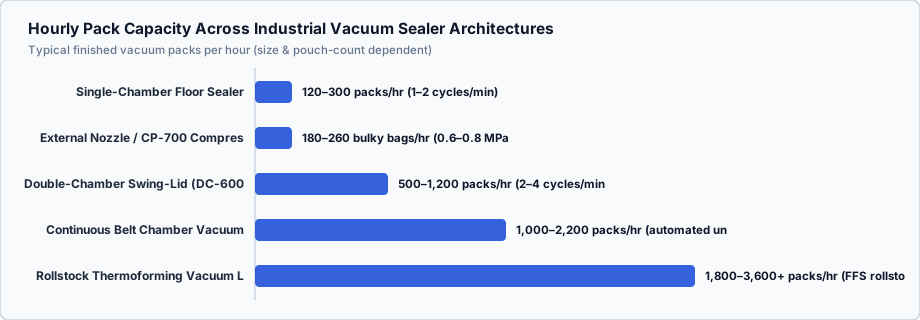
Explore related platforms in Industrial Vacuum Sealers, Vacuum Pump & Film Specs, or send your pouch sizes & hourly target via Project Brief.
Related Specifications
Further Reference
Verify Dimensions & Operating Ratings
Send your target envelope, load requirements, and ambient environment to review matching configurations.